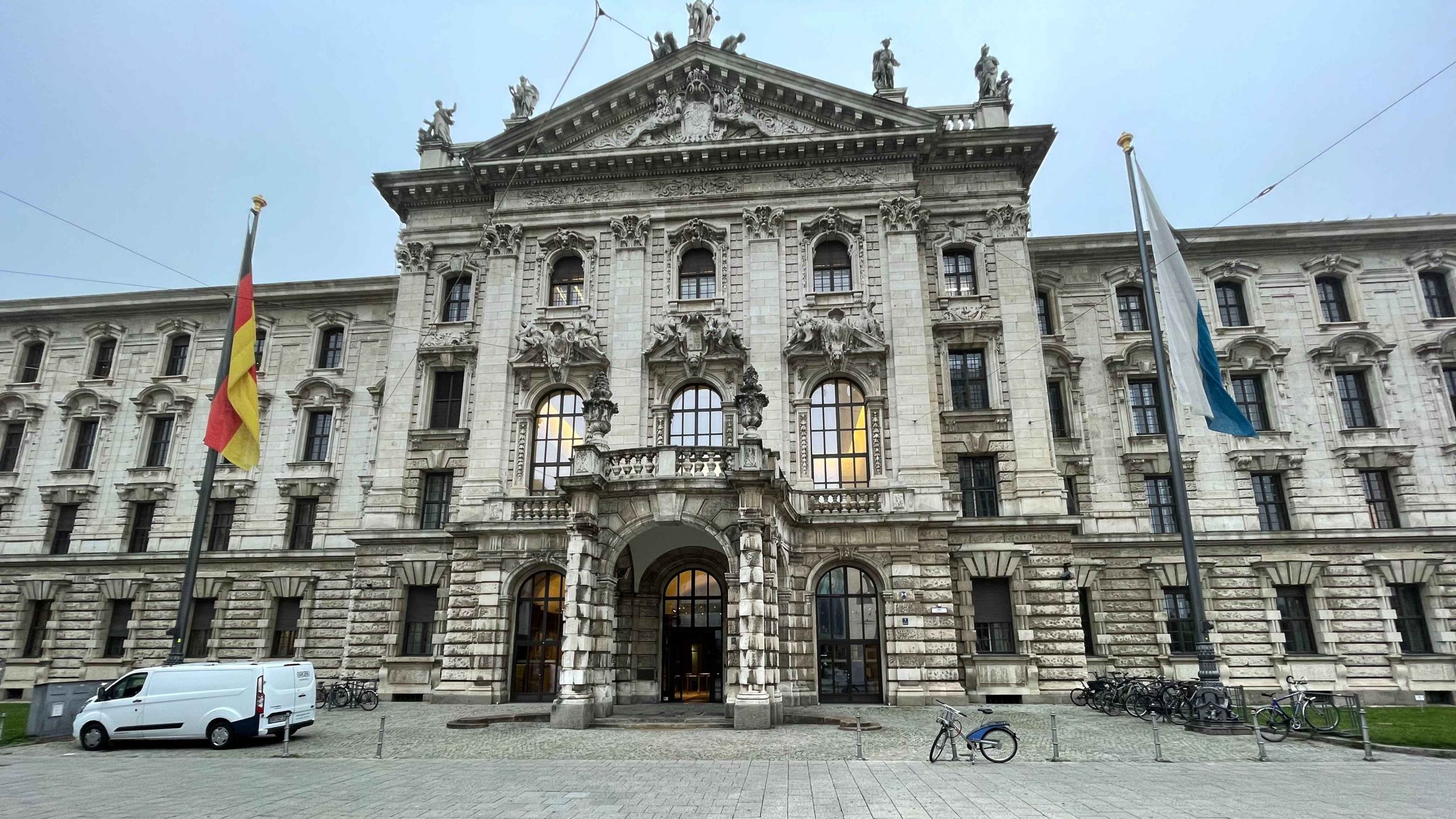
On July 31, Judge Elke Schwager of the Munich Regional Court ruled against Suno in favour of the German music rights collection society GEMA in its lawsuit against the generative AI company. Here’s our breakdown.
This is a verdict with wide-ranging significance, as it represents the first European verdict against Suno’s use of copyrighted material to train its model. It will be seen as a precedent in current and future cases, including the current case involving Suno, Universal Music Group and Sony Music Group.
Specifically, the ruling found two separate violations of German law. I read through the details posted in German by the Bavarian State Ministry of Justice, as well as GEMA’s German-language release, and here is what I gleaned:
- The storage of information from copyrighted works for the training of the Suno LLM violates applicable German and US copyright laws through the use of songs as training material in the USA. It also violates EU law through the storage and reproduction of training materials in the EU. Specifically, by scraping YouTube and other distribution channels to rip streams and, in the case of YouTube, by bypassing its “Rolling Cipher” download-prevention tool to rip and “listen” to hundreds of thousands of hours of music Suno violated both fair-use principles and copyright law.
- The delivery of songs similar to known original works, based on specific user prompts detailing song lyrics, musical styles and work titles, violates EU law. It also demonstrates the memorisation by Suno’s LLM of the structural and musical models of the original works, representing a further infringement of copyright law.
Suno disputes GEMA’s accusations, arguing that the pieces of music in question are not protected by copyright, are not stored by Suno and are not contained in its LLM. It also argues that the outputs in question, including songs resembling “Big in Japan,” “Mambo No. 5 (A Little Bit of…)” and “Forever Young”, were the result of complex iteration and refinement and that the claims are therefore invalid.
GEMA CEO Dr. Tobias Holzmüller said of the verdict:
“Human creativity is the basis of all generative AI. Without humans, artificial intelligence is nothing. The Chamber has made it clear today that AI models based on the theft of intellectual property are not protected by the legal system. AI providers must purchase licenses and may not use the works of our members free of charge. In doing so, the court has significantly strengthened Europe as a cultural location today. If systems are operated in Europe, there can also be lawsuits in European courts. This is crucial for the enforcement of the law.”
I agree.
Following the verdict, Judge Schwager stated that it was “indisputable that Suno undoubtedly used the cited musical works when training its LLM and had downloaded them through ‘stream ripping.’”
The next steps in the case are for Suno to provide GEMA with a breakdown of its revenues and to pay damages, the nature and amount of which are yet to be determined.
This is not the final judgment. Suno can appeal the decision to a higher court and will likely appeal to the Munich Higher Regional Court. If this verdict stands – and there is a good chance that it will – Suno could face potentially significant payouts to remunerate rights holders.
Analysis:
Suffice it to say, Suno had a bad day.
Judge Schwager’s ruling has international implications, particularly in the EU, where this case gives judges in every member country a precedent for adjudicating future cases. In the US, it will certainly add fuel to the fire for the plaintiffs in the Sony Music Group and Universal Music Group case now before a Boston court, where billions of dollars in potential damages are at stake.
Personally, I agree with the verdict. With some minimal smart prompting, Suno allows users to receive outputs that are substantially similar to famous copyrighted works. I have conducted this type of prompting myself on Suno to generate outputs that mimic the sound, melody and structure of songs by various artists, including the German band Rammstein and the Japanese trio Perfume.
As a for-profit business, and for the reasons I have stated previously, Suno’s scraping of songs and song-related data falls outside the scope of fair use.
This is one of the first major cases in the world to rule on how copyright law applies to the training and outputs of generative AI music systems.
So, what does this mean for all of you?
The use of your music to train generative AI systems is a privilege that AI companies need to pay for, not a right. The use of copyrighted materials without the underlying rights holders’ permission constitutes infringement and is subject to compensation and damages in favour of those rights holders.
The real devil in the details is not the description of copyright infringement by generative AI systems, but how to build a long-term remuneration model that pays rights holders and creators now and in the future.
Generative AI systems such as Suno are not going away. But with rulings such as today’s in Munich, it is clearer than ever that a long-term licensing and remuneration model is in the interests of generative AI music companies, rights holders and creators throughout the music industry.
GEMA has proposed such a model with its PLAI licensed AI training dataset initiative, which you can read more about here:
https://www.gema.de/de/die-gema/ki-hub/plai-by-gema
I know it’s in German, so use a translator. 🙂
This verdict is a major step towards establishing a new remuneration model, and we are waiting with great interest to discover exactly what the payout to GEMA will be when all is said and done.
What Does This Mean for You in Sync?
Now more than ever, DO NOT put your music through Suno or any generative AI music system that has not been trained on ethically sourced materials. Whatever you do, DO NOT submit music for any brief or request for the licensing or creation of music if it has been passed through Suno in any way.
By virtue of this verdict, and until there is a final judgment, anything processed through Suno’s generative AI, even if you created every single element of the song and merely asked Suno to produce a remix could infringe copyright.
In the minds of decision-makers at studios, networks, agencies and brands, the use of AI-generated music in productions and projects will be seen as creating greater potential for risk and litigation as a result of today’s ruling.
In short, you are best served by not submitting tracks for sync opportunities that contain AI-generated elements, either in whole or in part.
This is not to say that AI cannot be useful to your sync practice – far from it. Operational AI systems can help enormously by creating efficiencies in discovery, metadata enhancement, workflow optimisation, categorisation and production.
We should not allow this verdict to instil fear about all uses of AI. Instead, we should use it as an opportunity to identify both the positive and challenging aspects of integrating AI into our work.